Written By: Cait Morrone
Brazil, according to The World Factbook, is the largest and most populous country in South America, with a population of almost 2.2 million (2023 est.). Each year, Brazil attracts millions of international visitors with its diverse cultural practices, architecture, history, and biodiversity – to name a few. Popular tourism cities in Bahia, such as Rio de Janeiro and Salvador, as well as Brazil’s Amazonian regions host steady tourism revenues through alluring beaches, historical locations, national parks; each filled with various cultures. Underneath Brazil’s beautiful qualities lies a history of human trafficking, with a parallel pattern of social injustices that is seen in all seven continents.
Human Trafficking Definitions
- Human Trafficking (HT): the recruitment, transportation, transfer, harboring, or receipt of people through force, fraud or deception, with the aim of exploiting them for profit (United Nations). Different forms of human trafficking include sex trafficking, labor trafficking, and organ trafficking – each of which are present internationally.
- Sex trafficking: expands on the definition of HT, specifying that the goal of trafficking is for the purpose of a commercial sex act, in which the commercial sex act is induced by forced, fraud, or coercion, or in which the person induced to perform such act has not attained 18 years of age (US National Human Trafficking Hotline).
- Commercial sex acts, or ‘transactional sex’: any sex act on account of which anything of value is given to or received by any person (e.g. money, gift cards, clothes, substances, transportation, jewelry, ect.; US National Human Trafficking Hotline).
- Labor trafficking, or ‘forced labor’: working under degrading conditions, exhausting working hours, debt bondage, forced labor or restriction of freedom/movement (UNHCR).
- Debt Bondage: includes a pledge of services by the debtor or someone under debtor’s control to pay down known or unknown charges (e.g. fees for transportation, boarding, food, and other incidentals; interest, fines for missing quotas, and charges for “bad behavior”). These services have no definitive end or limit, therefore, an individual is trapped in a cycle of debt that [they] can never pay down (US National Human Trafficking Hotline).
- Organ Trafficking: the illegal harvesting from a living or dead individual and the illegal sale and transplantation of human organs (The Congressional Research Service).
Brief History of Slavery In Brazil
Human trafficking in Brazil’s roots go back to slavery, which began in the 16th century, when almost 50% of the 12 million enslaved Africans brought to the New World – along with the millions of indigenous tribes which were colonized and enslaved. According to the Brazilian Report, in 1988 the ‘Golden Law’ was signed which abolished slavery in all its forms, however, the legal end of slavery did little to change the lives of many Afro-Brazilians. The report continued to state that, without the proper integration policies or procedures, former-slaves had difficulties with aid in obtaining citizenship, education, land, or employment. Next, as the now free persons struggled to find jobs, they turned to former-slave owners, entering into informal agreements where free labor was paid with food and shelter. In the modern world, these agreements are recognized as labor trafficking, as the now free Afro-Brazilians are forced into this work by social and financial contributors, and are then exploited by land-owners who profit disproportionately off of the relationship. To this day, slavery’s impact lingers in societies internationally, one of these outcomes – and possibly the most obvious – is human trafficking.
Racial Disparities Seen in Human Trafficking Statistics
Recent studies have shown that there are racial disparities within the reported numbers of HT survivors. The Human Trafficking Search highlighted that the most vulnerable persons ot sex and/or labor trafficking are African American and Latinx children. Furthermore, according to a study reviewed by the Exodus Road, in 2008-2010, 4 in 10 sex trafficking victims in the United States (US) were Black and for labor trafficking; 63% of victims were Hispanic and 17% were Asian. However, these disparities are not seen solely in the US due to the historical influences of racism and slavery on today’s societies. As stated by the Polaris Project, attitudes and stereotypes about Black people enhance the vulnerability of Black people – especially women and girls – while simultaneously limiting the likelihood that they’ll be recognized or viewed as victims.
In Brazil, municipal-level anti-trafficking offices determined that most victims of HT are people of color – 63% of documented survivors in 2020 identifying as Black or brown, as explained by the Trafficking in Persons Report 2022 – Brazil. Furthermore, the WSD HANDA Center for Human Rights & International Justice (WSD HANDA) reported that, the majority percentage of girls and boys being sold for sex in Brazil are Black or brown – mainly women and girls between the ages of 15-24.
Human Trafficking in Brazil
According to the Human Trafficking Institute, 24.9 million victims of HT around the world; around 81% of which are labor trafficking survivors, and 19% are sex trafficking survivors. The UNODC Global Report on Trafficking in Persons (2020) identified that, in 2018, 5 of every 10 identified victims were adult women, and 2 of every 10 were girls. Furthermore, according to UNODC, about 30% of detected victims were children, and 205 were adult men. Lastly, recent studies have highlighted the vulnerability of the LGBTQI+ community to human trafficking, both sex trafficking and forced labor, as noted by UNODC.
In Brazil, there are an estimated 1,053,000 people in conditions of and 47% identified as vulnerable to human trafficking, as indicated by the Global Slavery Index.
Labor Trafficking
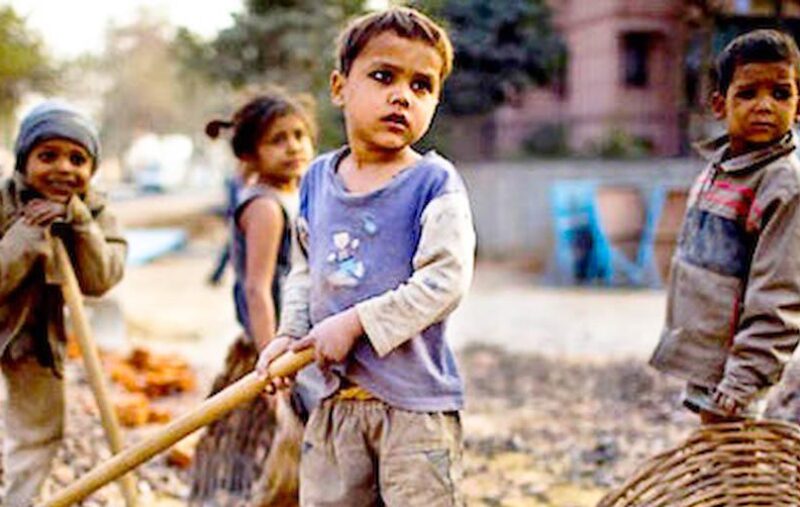
According to the Child Labor and Forced Labor Reports for Brazil, the minimum age for work is 16 – 18 for hazardous work- and the minimum age for voluntary state military recruitment is 17. However, this report found that 638,943 children ages 5 to 14 were working in 2022. Furthermore, as listed by the Child Labor and Forced Labor Reports for Brazil, the worst forms of child labor in Brazil – all of which fit the definition of forced labor – include:
- Forced domestic work
- Forced begging
- Forced labor in the production of garments (ie. in garment factories)
- Commercial sexual exploitation (including pornography, sometimes as a result of human trafficking)
- Use by gangs to performs illicit activities (including drug trafficking, sometimes as a result of human trafficking)
Other forms of forced labor noted by the Trafficking in Persons Report 2022 – Brazil include construction; producers of sugar, coffee, garlic, charcoal, and carnauba wax; and forced engagement in criminal activity, including drug trafficking, in Brazil in neighboring countries. This report additionally emphasized that Brazil’s lack of centralized database and inconsistent reporting makes it difficult to evaluate, analyze, compare year-to-year data, and therefore it is challenging to draw conclusions.
According to the UNODC report of Human Trafficking Trends in Brazil, the largest percentage of labor trafficking survivors were men during the reporting period of 2017 to 2020. In 2022, the Secretary of Labor Inspection oversaw nearly 1,400 child labor specific operations, succeeding in the removal of 2,317 children from situations of child labor. On the other hand, when investigating child laborers in domestic service, the National Forum for the Prevention and Eradication of Child Labor found that most of the identified cases were 85% girls. Of these children working as child caregivers, domestic workers, and caretakers; 94% were between the ages 14 and 17, and 70% were Afro-Brazilian girls.
Recently in Brazil, Reuters reported on a rescue of 532 workers in August (2023)- including 26 children and youth and 74 victims of HT – within a series of rescues over a one month period. Reuters revealed one case where 97 workers were rescued from a garlic farm in southeastern Minas Gerais state with miserable working conditions. A statement from labor prosecutors noted a shortage of bathrooms, places to heat food, protective equipment, and seating; as well as an absence of formal work permits among workers. This is one example of many companies in Brazil – which are exploiting their workers with underpay, hazardous working conditions, and few resources to protect their human rights.
Sex trafficking
Sex trafficking, while less prevalent than labor trafficking, remains a social concern across Brazil’s regions, however data on the number of victims is limited due to low reporting percentages. As reported by WSD HAMSA, in 2001, it was estimated that 500,000 boys and girls throughout Brazil were ‘in prostitution’. WSD HAMSA also highlighted research from a 2013 survey of construction workers in Brazil, in which 57% confirmed sexual exploitation of children and adolescents nearby large construction projects, and 25% admitted to having had sex one or more times with adolescents. Lastly, they identified a 2012 report which concluded that 77% of men in Brazil believed that having sex with ‘underaged prostitues’ was common. Furthermore, according to the Trafficking in Persons Report 2022 – Brazil, the government reported a total of in the states of Rio Grande do Sul and Santa Catarina, women and girls are vulnerable to sex trafficking by gangs and organized criminal groups. This report additionally indicated that international trafficking perpetrators also target Brazilian women, presenting them with false promises of successful music careers, alluring them to South Korea where they are then forced into commercial sex.
LGBTI persons in Brazil are especially vulnerable to sex trafficking – the Trafficking in Persons Report 2022 – Brazil emphasized a 2019 study which discovered that 90% of transgender women in Brazil are in commercial sex. Particularly, in Rio de Janeiro, the report stated that more than half are in a situation at heightened risk for HT. Next, the study highlights how vulnerable trans-women begin with paying traffickers for protection and daily housing fees, however they are often beaten, starved, and forced into commercial sex when they cannot make payments. Lastly, traffickers often entice transgender women into these relationships with false promises of gender reassignment surgery.
Among the coastal areas in Brazil, known for their beautiful beaches and vacation appeal, a negative side to this to the attraction of international travelers is child sex tourism. According to the Child Labor and Forced Labor Reports for Brazil, this is particularly common in tourist and coastal areas, including international victims from South American countries who are all exploited for commercial sex. Furthermore, the Information System for Confronting Human Trafficking organization highlighted 3,651 areas along highways – particularly in the states of Bahia, Goiás, Pará, Minas Gerais, and Ceará – where youth are at high risk for commercial sexual exploitation. Investigation from the Trafficking in Persons Report 2022 – Brazil determined that some of these highways include the BR-386, BR-285, and BR-116- which is the longest highway in Brazil, extending vertically to the coastlines. While sex trafficking is less prevalent than labor trafficking in Brazil, there are thousands of women, girls, and LGBTI persons who are sex trafficked, particularly in busy, tourist communities.
Organ Trafficking
A final form of human trafficking which is found in Brazil among other countries, is organ trafficking – every year, illegal organ transplants bring in around 1 million USD each year through an estimated 12,000 illegal transplants internationally. Statistical information is limited for organ trafficking due to its prevalence in certified medical communities with knowledge on how to remain undetected, and there is a lack of awareness by law enforcement on these underground networks.
The most common victims include refugees, migrants, and asylum seekers who, typically adult males, are the age of 30, whose organs pay for their entrance into a foreign country. Oftentimes, victims are coerced into donation by traffickers who state that kidneys can grow back, that they have 3 kidneys, or that post-surgical medical care will be provided. Additionally, they are enticed with being paid anywhere from $500 to $10,000 USD for their organs, but often never see a form of payment. Regrettably, organ trafficking victims are often seen as criminals, similar to the trafficker, if they did receive money for their organ. According to The Exodus Road, many authorities require psychological evaluation to assess whether the donor financially profted from or was coerced into organ donation. The act of organ trafficking, like other forms of HT, creates an asymmetrical relationship between the victim and the trafficker, allowing for exploitation of persons who fear the outcome of reporting to authorities.
Underlying Factors
There are many underlying factors which contribute to a person being at high risk for human trafficking. According to ICESAHT, the top five risk factors among the numerous situations which make a person vulnerable to human trafficking, are listed as recent migration or relocation, substance use, runaway or homeless youth, mental health concerns, and involvement in the child welfare system, among the numerous situations which expose a person to human trafficking.
The Human Trafficking Search researched how adverse childhood experiences (ACES) – or early-childhood trauma – impact an individual later in life. These traumatic experiences may include separation from a primary caregiver, witnessing or experiencing abuse or neglect in the household, poverty, and substance misuse. The lasting impacts of ACES include toxic stress, poor decision-making, relational difficulties, low self-worth, and a dysregulation stress response system. Additionally, the Human Trafficking Search identifies another underlying issue within the influences of institutional and societal racism on childhood ACES, as minority children are at increased risk of experiencing 4 or more childhood traumas. As a result of these impacts, children – particularly children of color – are more vulnerable to deception by traffickers; such as promises of earning money for their family, according to the Human Trafficking Search.
The LGBTQI+ community, similar to people of color, are discriminated against by society as well as their family and friends, who may ostracize the LGBTQI+ individual, as reported by UNODC. The Global Report on Trafficking Persons (2020) identified that, in comparison with heterosexual youth, LGBTQI+ youth are more likely to engage in illegal activities or resort to ‘transactional’ sex in exchange for money, shelter, food, and other necessities. Lastly, the combined factors of homelessness, discrimination, limited resources, violence, and ‘transactional sex’ pose LGBTQI+ persons at increased risk of HT, particularly sex trafficking.
Another underlying factor for human trafficking, according to UNODC, is migration status, in particular migrants who are undocumented. Many undocumented migrants are afraid of being exposed to authorities, which traffickers take advantage of as a coercive tactic to maintain the exploitative relationship.
In Brazil, the main driving factor to human trafficking is the poverty rates experienced by millions of Brazilians. UNODC Brazil HT Expert Heloisa Greco highlighted that Brazilians living in low socio-economic communities with few employment opportunities resort to accepting degrading offers, which later turn out to be exploitation. Traffickers often are successful in recruiting individuals by delivering false-promises of housing or financial security for victims and their families in exchange for labor which entice people into exploitative situations. Additionally, WSD HAMSA stated that the majority of victims in sex trafficking in Brazil are female and from situations of extreme poverty in context of social exclusion. In order to address HT, it is important to additionally analyze compounding factors, such as poverty or homelessness, and provide support for these social issues as well.
Call to Action
João Chavez, the Federal Public Defender who contributed to the UNODC Human Trafficking Report in Brazil, stated that the primary need is to strengthen our capacity to detect and assist victims of human trafficking.
The Child Labor and Forced Labor Reports for Brazil suggested four government actions to eliminate Child Labor: legal framework, enforcement, government policies, and social programs. There are several ways that you can get involved with minimizing HT in Brazil:
- Get involved with volunteering or donating to grassroots organizations on the ground
- Advocating for policy amendments and the implementation of social programs
- Advocate for these social issues and engage others within these efforts
Brazil may appear luscious and its culture exotic, but behind the scenes is gloom and hardship that many of us simply can’t imagine.
If you’re interested in helping persons experiencing human trafficking in Brazil, get involved by working with Global Foundation for Girls.
You can make a difference in the lives of so many by making a donation, or contacting us to find out about other ways you can help.